
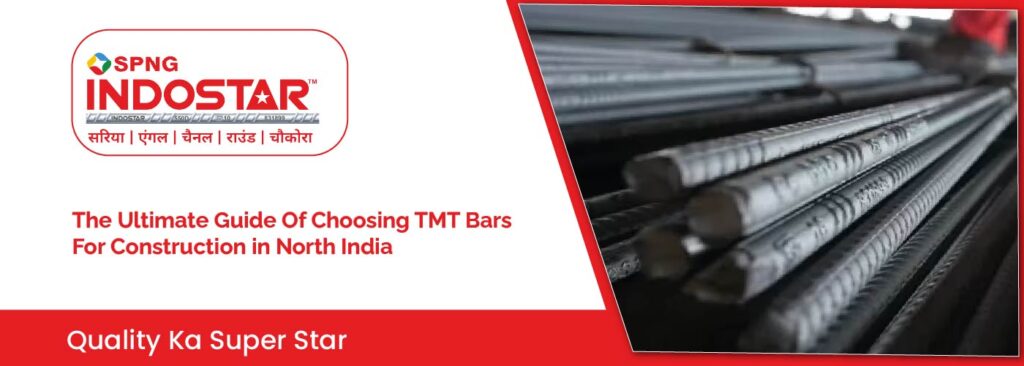
Introduction to TMT Bars in Modern Construction
TMT Bars for Construction are the backbone of every strong building. Every strong building begins with something people rarely see — its structural skeleton.
Behind the concrete walls, beams, and pillars lies reinforcement steel, commonly known as TMT bars. These bars carry the weight of the entire structure, absorb stress during earthquakes, and ensure that buildings stand tall for decades.
Yet, when many people start construction, they focus on tiles, paint, or interiors. The quality of steel reinforcement often gets overlooked, even though it is the most important structural element.
If you are building a house, apartment, or commercial property in North India, choosing the right TMT bars becomes even more critical. From seismic zones to temperature fluctuations, the region presents unique challenges for construction.
This guide will help you understand:
- How TMT bars work
- Which grades are best
- How to check steel quality
- What mistakes to avoid
- Why trusted brands matter
Why TMT Bars for Construction Are the Backbone of Every Structure
Imagine a human body without bones. It simply cannot stand.
Similarly, reinforced concrete structures depend on TMT bars to maintain strength and stability.
Strength and Load Bearing Capacity
Concrete is excellent at handling compression but weak when dealing with tension forces.
This is where TMT bars play a vital role.
They provide:
- Tensile strength
- Structural Stability
- Load distribution across beams and columns
Earthquake Resistance
North India includes several seismic zones, especially areas in Uttarakhand, Himachal Pradesh, and parts of Delhi and Punjab.
During earthquakes, buildings face intense lateral forces. TMT Bars for Construction are the backbone of every strong building.
This flexibility allows structures to absorb seismic shocks safely.
For a deeper understanding of this concept, read our article on Earthquake Resistant Construction.
Durability and Corrosion Protection
Construction steel faces constant threats from:
- Moisture
- Temperature changes
- Soil chemicals
- Environmental pollution
Modern TMT bars are manufactured using thermo-mechanical treatment, which creates:
- Strong outer surface
- Soft inner core
- High corrosion resistance
Understanding TMT Bar Grades
Steel grades define strength levels and performance characteristics.
Two commonly used grades in India are Fe500 and Fe550D.
What Fe500 Means
Fe500 bars have a yield strength of 500 N/mm².
They are widely used in:
- Residential houses
- Small commercial buildings
- Reinforced concrete structures
Key advantages include :
- Balanced strength
- Good flexibility
- Reliable performance in standard construction projects.
- High-rise buildings
- Infrastructure projects
- Bridges and large structures
- Fe500 or Fe500D works well
- Fe550D offers additional safety in seismic zones
- Extreme summer heat
- Cold winters
- High humidity during monsoon
- Clay soil
- Sandy soil
- Moist river basin soil
- Uniform rib patterns
- Smooth surface finish
- Absence of cracks or rust patches
- Manufacturer identification marks
- Grade markings
- Standardized rib patterns
- Crack under stress
- Corrode faster
- Reduce building lifespan
- Tensile strength tests
- Bend and rebend tests
- Chemical composition analysis
- Consistent quality
- Reliable supply
- Certified manufacturing
- Structural safety assurance
What Fe550D Means
Fe550D bars provide higher strength and superior ductility.
They are commonly used in:
The “D” indicates improved ductility, making these bars ideal for earthquake-prone regions.
If you want a deeper comparison, read our blog:
Fe500 vs Fe550D TMT Bars: Which One Is Better for Residential Construction?
Choosing the Right Grade for Residential Construction
For most homes in North India:
However, the final decision should always be taken with structural engineer guidance.
Factors That Affect Steel Performance in North India
Construction conditions vary significantly across regions.
North India has specific environmental factors that impact steel performance.
Climate Conditions
The region experiences:
These fluctuations can lead to thermal expansion and contraction, which affects structural stress.
High-quality TMT bars handle these conditions better.
Seismic Zones
Many northern states fall under earthquake-sensitive zones.
Structures in these areas must use ductile steel capable of absorbing sudden shocks.
This is why builders increasingly prefer higher grade TMT bars.
Soil Conditions
Different regions have varying soil properties.
Examples include:
These conditions influence foundation strength and steel performance.
Using strong foundation steel bars ensures stability even in challenging soil conditions.
How to Check the Quality of TMT Bars
Quality verification is crucial before using steel in construction.
Fortunately, several checks can be done directly at the construction site.
Visual Inspection
A quick visual check can reveal several issues.
Look for:
Irregular patterns may indicate poor manufacturing quality.
For detailed steps, read our guide:
How to Check TMT Bar Quality at a Construction Site.
Rib Pattern and Markings
Authentic TMT bars always contain:
These markings confirm that the steel meets quality standards.
Weight and Diameter Accuracy
TMT bars are manufactured according to precise weight specifications.
If a bar weighs significantly less than standard values, it may indicate material compromise.
Understanding diameter, length, and weight accuracy is essential for structural safety.
Our article on Why Diameter, Length and Weight Matter in TMT Bars explains this in detail.
Common Mistakes Builders Make While Choosing TMT Bars
Even experienced builders sometimes make costly mistakes.
Let’s look at the most common ones.
Buying Only on Price
Cheap steel often leads to expensive repairs later.
Low-quality steel may:
Construction is a long-term investment, and cutting costs on steel is rarely wise.
Ignoring Certification
Always ensure the steel carries BIS certification.
BIS standards guarantee that the steel meets Indian structural safety guidelines.
Learn more in our article on BIS Certified Steel.
Using Mixed Steel Brands
Another common mistake is mixing different steel brands in one project.
This can create uneven structural performance, which affects stability.
Professional builders prefer consistent steel quality from trusted brands.
Why BIS Certification Matters
The Bureau of Indian Standards (BIS) regulates construction steel quality.
BIS-certified TMT bars undergo rigorous testing, including:
Using certified steel ensures compliance with national construction standards.
Why Trusted Steel Brands Make a Big Difference
A trusted brand offers more than just steel.
It ensures:
When builders choose a dependable brand, they reduce the risk of construction defects and structural failures.
This is why many contractors rely on tested and trusted steel manufacturers for large projects.
Smart Tips for Builders and Homeowners
If you are planning construction, keep these practical tips in mind:
✔ Always check steel grade and certification
✔ Purchase from authorized dealers
✔ Verify diameter and weight standards
✔ Avoid mixing steel brands
✔ Consult a structural engineer
These steps may seem simple, but they can significantly improve building safety and longevity.
Conclusion
Choosing the right TMT bars is one of the most important decisions in construction.
While bricks, cement, and design shape the visible structure, steel reinforcement forms the hidden strength of the building.
In regions like North India, where climate variations and seismic activity play a role, selecting high-quality certified TMT bars becomes even more essential.
By understanding steel grades, checking quality standards, and relying on trusted brands, builders and homeowners can ensure that their structures remain strong, safe, and durable for generations.
After all, a building’s beauty may attract attention — but its strength ensures lasting confidence.
FAQs
1. Which TMT bar grade is best for house construction?
Fe500 and Fe500D are commonly recommended for residential construction due to their balanced strength and ductility.
2. How can I check TMT bar quality at a construction site?
You can perform visual inspection, bend tests, rib pattern verification, and weight checks to assess basic quality.
3. Why are ductile TMT bars important in earthquake zones?
Ductile bars bend under stress instead of breaking, allowing buildings to absorb seismic forces safely.
4. What is BIS certification in steel?
BIS certification ensures that TMT bars meet Indian safety standards for strength, composition, and durability.
5. Why should builders choose trusted TMT brands?
Trusted brands ensure consistent quality, certified manufacturing, and reliable structural performance.